 Ultimate guide
Right of Way Clearing for Utilities: A Complete Guide
Quick Summary
Right of way clearing for utilities is the removal of trees, brush and other vegetation from the strip of land that utility lines run through. It keeps lines safe, reliable and reachable, and because vegetation regrows, it is repeated on a recurring cycle.
- Utilities hold an easement, a legal right to use a defined strip of a landowner's property, which governs what crews can cut.
- Clearing methods include selective clearing, mechanical clearing with mulchers, and manual work with hand tools near sensitive areas.
- Work near energized lines follows OSHA rules in 29 CFR 1910.269 and 1910.333, plus the ANSI Z133 series for tree care.
- Utilities call before cutting through the 811 system to mark underground facilities, and re-verify marks before each shift on multi-day jobs.
- Many utilities clear every two to five years, and property owners should ask for the schedule for their segment.
Table of Contents
- What Right-of-Way Clearing Means for Utilities
- Easements, Permits, and Property Access Rules
- Clearing Methods: Selective, Mechanical, and Manual Work
- Equipment Used for Right-of-Way Clearing
- Safety Standards, Hazard Controls, and Environmental Safeguards
- Maintaining Utility Right-of-Way on a Repeating Schedule
- Preparing Your Property for a Utility Clearing Project
- Frequently Asked Questions
What Right-of-Way Clearing Means for Utilities
Last Updated: November 21, 2026
Right-of-way clearing is the work of removing trees, brush and other vegetation from the strip of land that utility lines run through, so the lines stay safe, reliable and reachable. Utilities depend on right of way clearing for utilities to keep their corridors dependable. Utilities such as electric companies depend on this corridor to keep power flowing.
Right-of-way clearing is the removal of vegetation within a utility easement so that power lines can be built, inspected and repaired safely. The right-of-way is the strip of land a utility has been granted rights to use, and it is normally kept free of tall growth beneath and beside the conductors.
Utilities operate high-voltage lines across long corridors, and that scale is why clearing has to be planned and repeated rather than handled ad hoc.
Transmission lines versus distribution lines
Transmission lines carry electricity at high voltage across long distances, while distribution lines carry it at lower voltage to homes and businesses. Both need clearance from vegetation, but the consequences of a contact differ. A tree touching a transmission line can cause a wide outage, and the clearance zone is generally wider than on a distribution line.
Transmission corridors are usually wide and often cleared selectively, keeping low-growing plants while removing tall trees. Distribution rights-of-way run along roads and neighborhoods, where overhanging limbs and trees near poles are the common concern.
Why utilities clear vegetation on a recurring cycle
Vegetation keeps growing, so right of way clearing for utilities is recurring work rather than a one-time operation. Vegetation regrows, so clearing is typically repeated on a cycle that depends on region and vegetation type. Fast-growing species push back into the corridor quickly, which can shorten the cycle in some areas.
Easements, Permits, and Property Access Rules
A utility usually holds an easement, a legal right to use a defined strip of a landowner's property for its lines and crews. The easement document sets out what the utility may do, including clearing and access. Property owners should read that document before work begins, because it governs what the crew can cut and where they can drive.
Permits and local rules can add requirements on top of the easement, especially near roads, waterways and protected trees. Requirements differ by state and county, so confirm the rules that apply to your property with the utility and the local authority before work starts.
Clearing Methods: Selective, Mechanical, and Manual Work
Utilities use several approaches. Selective clearing removes tall-growing vegetation while leaving low plants that will not threaten the lines. Some utilities have moved transmission-line rights-of-way toward selective clearing. Mechanical clearing uses machines such as mulchers to cut and process brush across wide areas. Manual work with hand tools and chainsaws handles tight spots, sensitive trees and areas machines cannot reach.
A crew often combines these methods on one corridor, using machines for open ground and manual cutting near structures.
Equipment Used for Right-of-Way Clearing
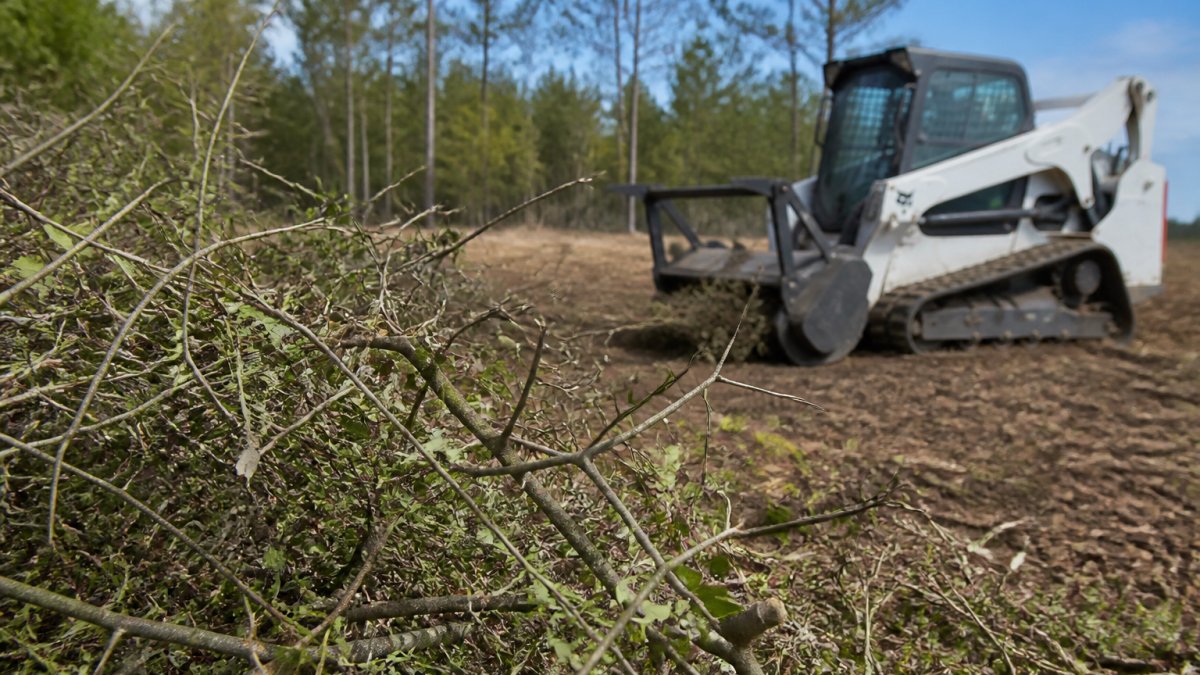
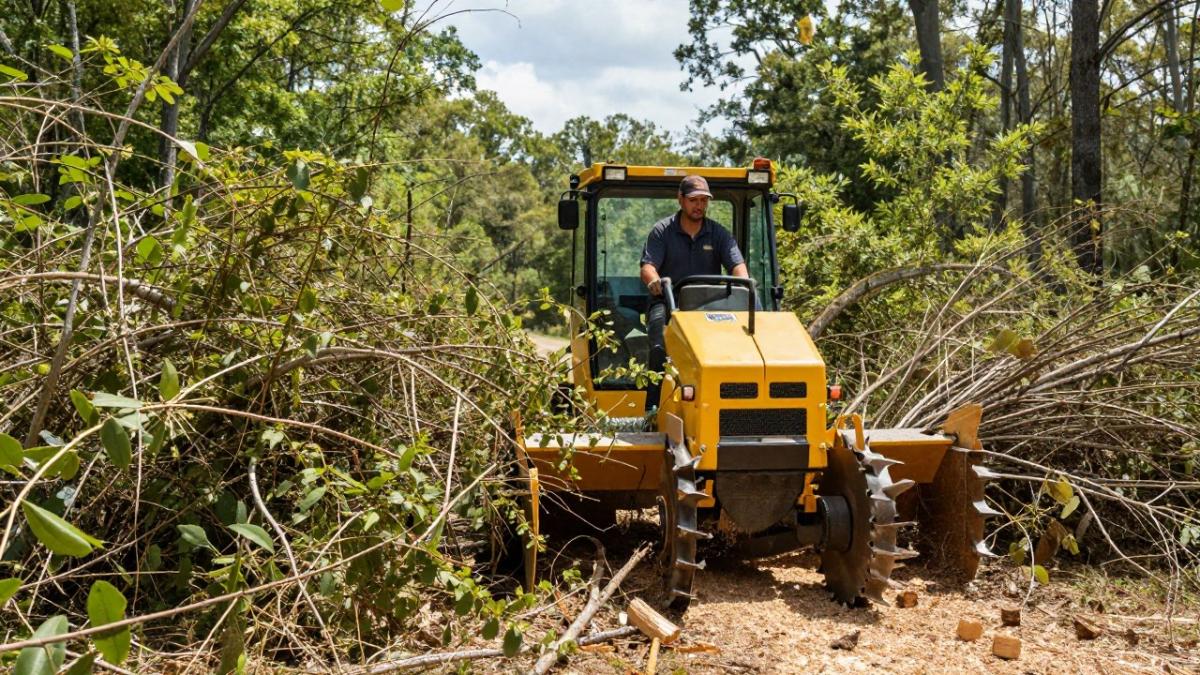
Forestry mulchers are the workhorse of wide corridor clearing. They grind brush and small trees in place, leaving a layer of mulch that suppresses regrowth. Boom-mounted saws and chippers handle taller growth, and skid steers or tracked carriers carry crews and materials along wet or uneven ground.
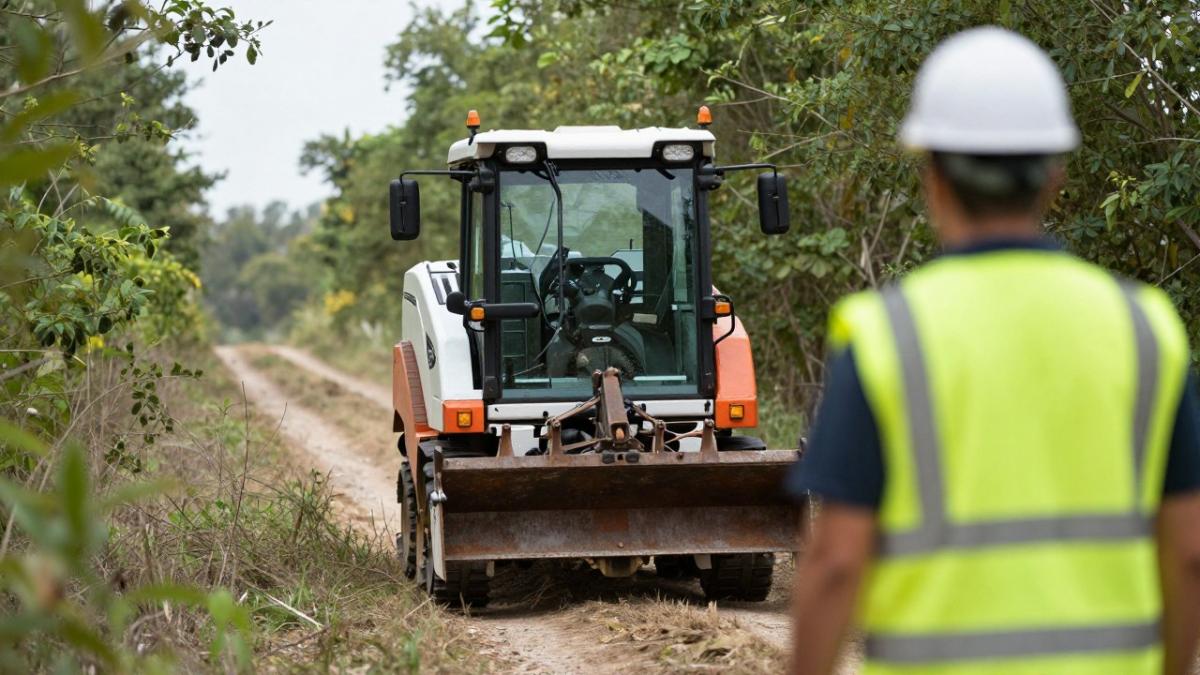
Equipment choice depends on terrain, vegetation size and access. Wet ground may call for tracked machines that spread their weight, while steep slopes need equipment rated for the grade.
Safety Standards, Hazard Controls, and Environmental Safeguards
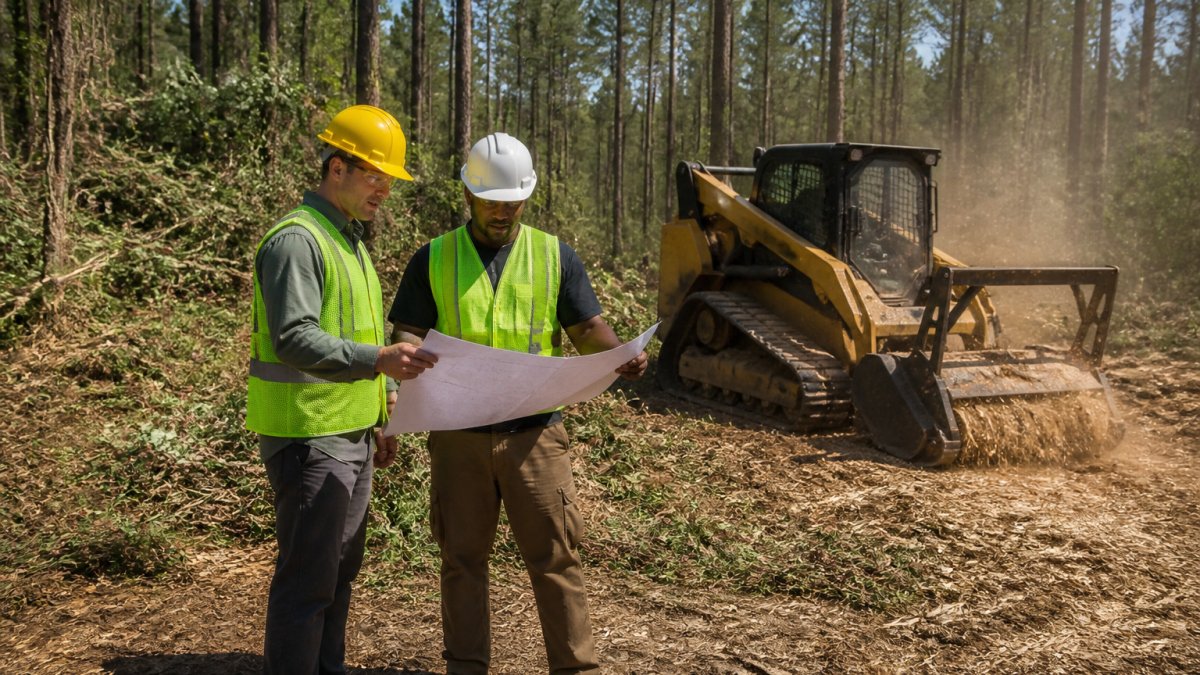
Clearing near energized lines is hazardous, and crews need training, clearance distances and de-energization procedures before working close to conductors. Operators should keep equipment and falling limbs well away from lines, and every job should begin with a hazard assessment.
Safety on a right-of-way job is governed by a layered set of standards. The Occupational Safety and Health Administration (OSHA) sets the minimum requirements for electrical protective equipment and approach distances in 29 CFR 1910.269 for electric power generation, transmission and distribution, and in 29 CFR 1910.333 for work near exposed energized parts. The American National Standards Institute (ANSI) publishes the Z133 series for tree care operations, which many utilities and contractors adopt as a condition of work (ANSI Z133 Arboricultural Safety Standards).
Hazard controls follow a predictable sequence. Before any cutting, the utility or its contractor locates and marks underground facilities through the 811 call-before-you-dig system, and the utility confirms the energized status of every line in the work zone. Crews establish minimum approach distances for the voltage involved, use insulated tools and aerial devices rated for the work, and de-energize and ground lines when the work cannot be done safely at distance.
Watch out: a common failure is treating the utility locate as a one-time event; if the job spans days, re-verify marks before each shift because rain and equipment traffic erase them.
Environmental safeguards matter too. Erosion control, careful handling of stumps and debris, and attention to streams and wetlands protect the land after a crew leaves. On sloped ground, install silt fence or straw wattles downslope of disturbed soil before cutting begins, and stabilize exposed soil within the timeframe the local erosion and sediment control ordinance requires. Keep equipment out of wetlands and stream buffers unless the utility's permits allow it, and avoid cutting during the nesting season for protected species when the utility's environmental review flags that concern.
Restoration is part of the job, not an afterthought. Seed and mulch disturbed ground, repair rutted access roads, and document pre-work conditions with photos so any damage claims can be resolved fairly.
The article's safety and environmental rules for right-of-way work are summarized below.
| Requirement | Source or standard | Key detail |
|---|---|---|
| Electrical work rules | OSHA 29 CFR 1910.269 | Covers power generation, transmission and distribution |
| Work near exposed energized parts | OSHA 29 CFR 1910.333 | Governs approach to exposed energized parts |
| Tree care operations | ANSI Z133 series | Adopted by many utilities and contractors |
| Pre-cutting underground locate | 811 call-before-you-dig | Marks underground facilities before cutting |
| Traffic control near roads | MUTCD | Signs, cones and flaggers for road corridors |
| Herbicide use | FIFRA | Follow label directions and approved rates |
| Erosion control on slopes | Local erosion and sediment ordinance | Silt fence or straw wattles downslope |
Maintaining Utility Right-of-Way on a Repeating Schedule
Because vegetation regrows, a utility sets a maintenance cycle, usually every few years, and returns to clear the corridor again. Tracking when each segment was last cleared helps planners spot areas where growth is outpacing the schedule.
A well-run program goes beyond a calendar. Most utilities measure a handful of indicators that tell them whether the cycle is working: clearance compliance (the percentage of spans meeting the minimum clearance distance for their voltage class), regrowth rate (how fast vegetation returns to the clearance zone after a cut), outage trends tied to vegetation contact, response time to hazard reports, and inspection intervals by segment. When clearance compliance drops or regrowth accelerates, the utility shortens the cycle for that segment rather than waiting for the next scheduled pass.
Inspection is the input that makes those measures useful. Crews or inspectors walk or drive each corridor on a defined interval, record species, height and distance to conductors, and flag fast-growing or hazard trees for priority work. Many programs use a tiered approach: a full inspection on the normal cycle, a mid-cycle drive-by or aerial review for fast-growth areas, and on-demand inspection after storms or when a customer reports a problem. The records from those inspections feed the next work plan, so the schedule reflects actual conditions rather than a fixed number of years.
Watch out: a common pattern is letting the inspection interval stretch during budget pressure; the savings are usually erased by emergency repairs and outage costs in the following season.
For a property owner, the practical takeaway is to ask the utility for its inspection schedule and the name of the forester or contractor responsible for your segment, and to report hazard trees between cycles rather than waiting for the next pass. For a utility or contractor building a program, the measurable framework above is what separates a defensible maintenance plan from a reactive one.
Preparing Your Property for a Utility Clearing Project
If a utility is clearing across your land, start by reviewing the easement and asking the utility for its schedule and contractor contact. Mark fences, gates, irrigation lines and any landscaping you want protected. Move vehicles, equipment and stored items out of the work area.
Property owners who plan their own land clearing should also get a site assessment before committing. Pricing depends on acreage, vegetation density, access and disposal needs, so contact Palmetto Mulching & Clearing, LLC through our website for a current quote.
Frequently Asked Questions
What is right-of-way clearing?
Right-of-way clearing is the removal or control of trees, brush, and other vegetation within a corridor that a utility uses for power lines, pipelines, or other infrastructure. The corridor must stay open so crews can reach equipment, and vegetation must stay far enough from conductors to prevent outages and hazards. Most utilities treat it as recurring maintenance rather than a single clearing job, scheduling work every two to five years depending on region and vegetation type.
Is a utility easement a public right of way?
Not usually. A utility easement is a legal right granted by a property owner that allows a utility to use a defined strip of private land for its facilities, while the land remains privately owned. A public right of way, by contrast, is land held for public use such as roads and sidewalks. Utility easement clearing rights are set by the recorded easement document, so property owners should review that paperwork before work begins.
Can a utility company enter private property to clear vegetation?
Often yes, but the scope depends on the recorded easement and applicable state and local rules. Many easements grant the utility access to trim or remove vegetation that threatens its lines. Property owners should ask for written notice, confirm the boundaries of the work area, and request documentation of the easement terms. Disputes over fences, drainage, or damage are typically resolved through the easement language and the utility's claims process.
How often should vegetation be cleared along a utility right-of-way?
Most utilities schedule right-of-way clearing every two to five years. The interval depends on region, climate, and the type of vegetation growing in the corridor. Fast-growing species and wet conditions can shorten the cycle, while slower-growing cover may extend it. Forestry mulching for utility corridors is often used on these recurring cycles because it can reduce brush regrowth and limit the amount of material hauled off site.
Can cleared vegetation be mulched instead of hauled away?
Yes. Forestry mulching grinds trees and brush into fine material that stays on site and can help stabilize soil. It is often used along utility corridors when hauling is impractical or when the owner wants to limit trucking and disposal costs. Mulching is not appropriate for every site, particularly where disease, diseased wood, or local regulations require removal, so the method should be confirmed during project planning.
What are the safest methods for clearing vegetation near power lines?
Work near energized lines should follow the clearance distances set by the utility and by applicable federal and state safety rules, including OSHA requirements for electrical work. Crews should use trained operators, de-energize lines where possible, and keep equipment beyond required approach distances. Qualified line-clearance personnel, not general crews, should perform work within the restricted zone around energized conductors.
Do I need a permit for right-of-way clearing on my land?
It depends on the location, the scope of the work, and local ordinances. Some counties regulate tree removal, buffer zones, and stormwater or erosion control on cleared land. Utilities usually handle permits for their own corridor work, but property owners doing separate clearing should check with their county planning or zoning office before starting. Confirm the rules early to avoid fines or required replanting.