 How-to
Hiring Professional Tree Removal Services: 2026 Guide
Table of Contents
- Why Hiring Professional Tree Removal Services Beats DIY
- Step-by-Step: How to Vet a Tree Removal Company
- What a Tree Removal Estimate Should Include
- Understanding Tree Removal Cost and Pricing Factors
- Tree Removal Cleanup: What to Expect and Confirm
- Permits, Protected Trees, and Local Regulations
- How to Compare Bids Beyond the Lowest Price
- Frequently Asked Questions
Last Updated: October 21, 2026
Why Hiring Professional Tree Removal Services Beats DIY
Hiring professional tree removal services is the safer, faster path when a tree threatens a home, a fence line, or a power drop. At Palmetto Mulching & Clearing, LLC, we have cleared and mulched many acres across the Carolinas and Georgia, and the jobs that go wrong almost always started as a weekend project.
The math is simple. A chainsaw costs less than a hospital visit, but only if nothing goes wrong. One kickback, one misjudged lean, one hidden rotten core, and the equation flips.
The Real Risks of Cutting Trees Yourself
Falling a tree is a skill measured in years, not afternoons. Three risks catch homeowners most often:
- Barber-chair failures. A trunk under tension can split vertically and kick back with lethal force.
- Hidden decay. A tree that looks solid from the ground can be hollow at the hinge point.
- Drop-zone errors. Sheds, septic lines, and service drops sit exactly where amateurs aim.
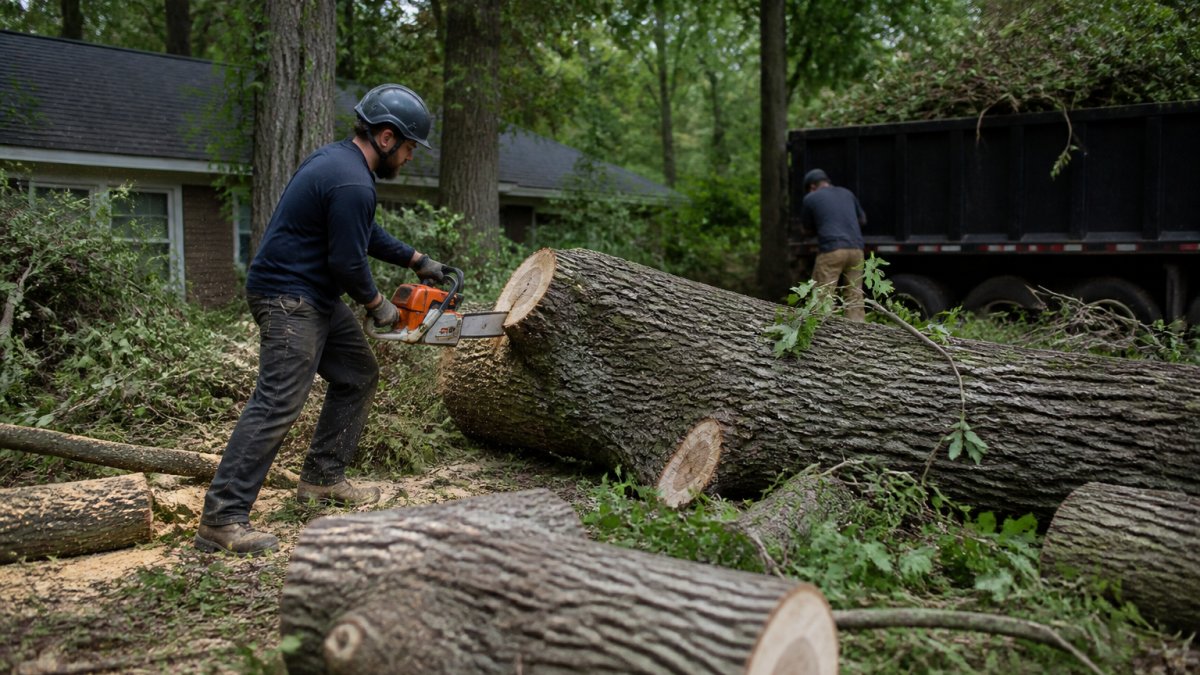
Then there is the cleanup. Limbs, brush, and rounds pile up faster than most people expect, and hauling them off is half the job.
Step-by-Step: How to Vet a Tree Removal Company
Vetting a tree removal company comes down to five steps, in this order: verify credentials, verify insurance, get a written on-site estimate, read the contract, and check payment terms.
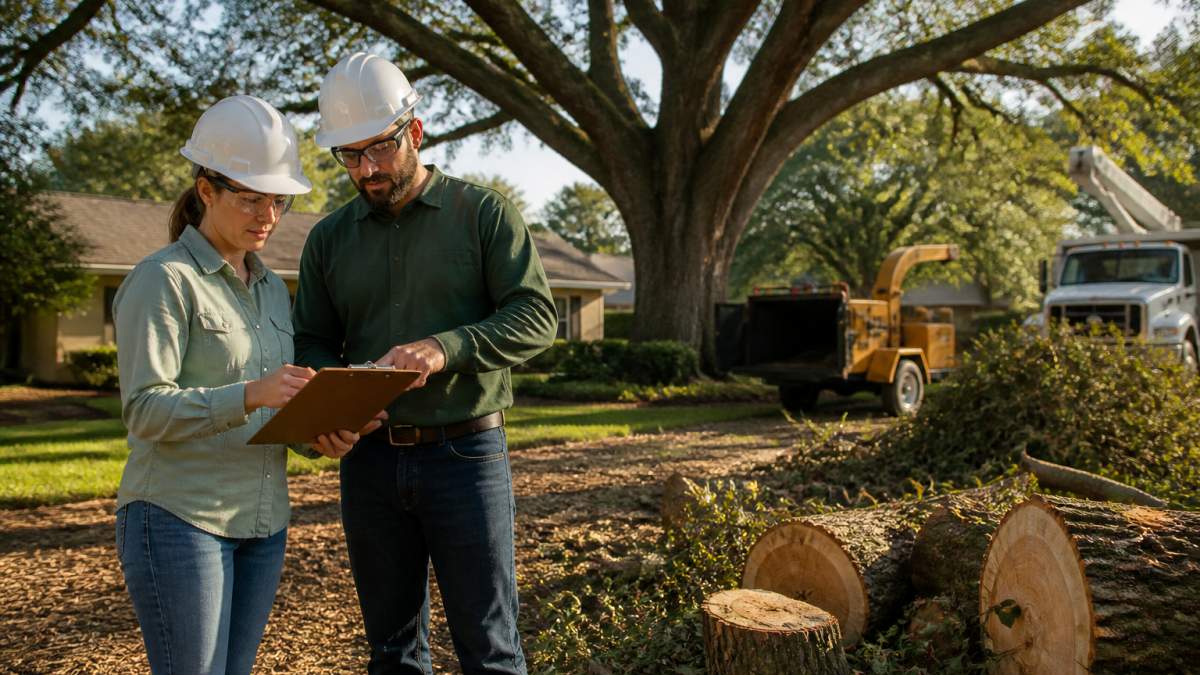
Here is the checklist we would hand a neighbor, with the specific action that turns each box from a claim into a verified fact:
- Ask for the company's state contractor license number, then look it up in your state's online license lookup, not the company's website
- Request a certificate of insurance sent directly from the insurer or agent, not forwarded by the contractor
- Confirm the certificate lists general liability and workers' compensation, and check the policy expiration date against your scheduled work date
- Ask whether an ISA Certified Arborist will assess the tree, and get the name and certification number in writing
- Get the estimate in writing, on site, with the scope, exclusions, and debris terms spelled out
- Read the contract for stump depth, cleanup language, damage responsibility, and cancellation terms
- Never pay the full amount up front, and never pay cash without a receipt
Check Credentials and ISA Certification
ISA certification means the person assessing your trees has passed the International Society of Arboriculture's exam and keeps up with continuing education.
Ask who will actually climb or operate the equipment, not just who sells the job. The gap between the two is where surprises live.
You can verify an individual's ISA certification through the International Society of Arboriculture's public credential lookup.
Verify Tree Removal Company Insurance and Licensing
Tree removal company insurance is the single most important thing to verify, because an uninsured crew turns your property damage into your problem. Ask for two documents: general liability coverage and workers' compensation coverage.
A common mistake is accepting a photocopy handed over by the salesperson. Certificates can be altered.
Licensing varies by state and sometimes by municipality. Some states license tree care contractors; others do not.
What a Tree Removal Estimate Should Include
A proper tree removal estimate is a written scope of work, not a number on a business card. It should name every tree, describe the access route, and state exactly what happens to the debris. If a bid is one line long, it is not an estimate.
Insist on these items before comparing anything:
- Tree count, species, and approximate height
- Equipment required and access path to the tree
- Whether the stump is ground, and to what depth (8 inches is a common standard; deeper costs more)
- Debris removal versus leaving cut wood on site
- Cleanup scope: raking, grading, and hauling
- Start date, duration, and weather contingencies
- Payment schedule and deposit amount
Questions to Ask During the On-Site Estimate
Use the visit as an interview, not a sales call. A company that has done the work will answer these without hedging:
- How will the crew protect the driveway, lawn, and fence line?
- What happens if a limb takes out a gutter or a window?
- Who handles the utility disconnect if one is needed, and is that cost in the bid?
- Will the stump be ground, and how deep?
- Is the debris hauled off, chipped on site, or left for me?
- How many people will be on the crew, and who is the lead on site?
- What is the plan if weather turns during the job?
- Can you name two recent jobs nearby I can drive past?
Write the answers down. The same question asked of three bidders produces a comparison you can actually use.
Written Estimates, Contracts, and Payment Red Flags
An itemized written estimate is the document you compare; the contract is the document you sign. They are not always the same, and the gap between them is where disputes start.
Compare bids line by line, not by total. A bid that is higher but includes stump grinding, haul-off, and a verified insurance certificate is often the cheaper job in the end.
Read the contract for these terms before signing:
- Exclusions. What is explicitly not included (stump, debris, cleanup, permits)?
- Stump depth. Stated in inches, not "ground."
- Damage responsibility. Who repairs a cracked driveway or a torn gutter?
- Cancellation and rescheduling. What happens if weather delays the job?
- Payment terms. Deposit amount, progress payments, and final payment trigger.
Understanding Tree Removal Cost and Pricing Factors
Tree removal cost depends on height, access, lean, decay, and proximity to structures, not on a flat rate per tree. Two trees of the same size can price very differently if one stands in an open field and the other leans over a roof with a septic line beneath it.
Pricing usually moves with these factors:
| Factor | Effect on Price | Why It Matters |
|---|---|---|
| Tree height and diameter | Higher | More rigging, more crew, more risk |
| Access and terrain | Higher | Tight gates and wet ground slow equipment |
| Proximity to structures | Higher | Requires controlled sectional removal |
| Stump grinding | Higher | Separate equipment and spoil handling |
| Debris haul-off | Higher | Trucking and disposal fees |
| Emergency or storm work | Higher | Overtime and hazard pay |
Ask for a written quote based on your actual site, and treat any phone estimate as a starting point, not a commitment.
Tree Removal Cleanup: What to Expect and Confirm
Tree removal cleanup means the crew leaves the site rake-ready, with brush, limbs, and rounds removed or stacked as agreed. Cleanup is where cheap bids quietly cut corners, and it is the first thing to nail down in writing.
Confirm these before work begins:
- Whether brush and limbs leave the property or get chipped on site
- Whether firewood is stacked, split, or hauled away
- Who rakes, and whether grading or seeding is included
- Whether the stump hole is backfilled with grindings or topsoil
- How ruts and tire tracks get repaired
If cleanup is not in the contract, it is not in the price. That is the whole rule.
Permits, Protected Trees, and Local Regulations
Tree removal permits are governed locally, and the rules vary by city, county, and state. Some jurisdictions require a permit for any tree above a certain diameter. Others protect specific species outright.
Before you sign anything, call your local planning or permitting office and ask three questions:
- Does this tree require a removal permit?
- Is the species protected in this area?
- Are there restrictions on removing trees near waterways or property lines?
Ask the contractor the same questions. As documented in state forestry agency guidance on tree removal and permits, removal near waterways and wetlands often falls under separate rules entirely, so mention any creek, pond, or drainage easement on the property.
How to Compare Bids Beyond the Lowest Price
Comparing tree removal bids means comparing scopes, not totals. Two quotes that differ by a wide margin usually differ in what they include, not in how much the company needs the work.
Put the bids side by side and score them on:
- Scope match. Does each bid cover the same trees, the same stumps, and the same cleanup?
- Insurance and licensing. Verified, or just claimed?
- Credentials. Is an ISA Certified Arborist involved, and at what stage?
- Equipment fit. Can the crew actually reach the trees without tearing up the yard?
- Contract clarity. Are exclusions and payment terms spelled out?
- References. Can they name recent jobs nearby that you can drive past?
A bid that is higher but includes stump grinding, haul-off, and a verified insurance certificate is often the cheaper job in the end.
We handle tree removal as part of a broader land management scope, which means the same crew that takes down a hazard tree can grade the site, clear the brush, and prepare the ground for what comes next. That matters on acreage where a single tree is rarely the whole job. You can see how we approach it on the Occupational Safety and Health Administration's guidance on tree care hazards, which lays out the same safety logic our crews work under every day.
Frequently Asked Questions
What credentials should a professional tree removal company have?
Look for ISA certification for arborists on staff, state licensing where required, and proof of both general liability and workers' compensation insurance. Ask for certificates directly from the insurer, not just a verbal claim. A reputable company will also provide references and show a written contract that details the scope, cleanup, and payment terms.
Should a tree removal company provide proof of insurance?
Yes. Always request a certificate of insurance showing current general liability and workers' compensation coverage. Verify the policy is active by calling the insurer if needed. Without it, you could be held responsible for property damage or injuries on your property. Tree removal company insurance is a non-negotiable check before any work begins.
What should a tree removal estimate include?
A written tree removal estimate should list the number and size of trees, stump grinding depth, debris removal and cleanup scope, any permits required, and the total price with no hidden fees. It should also state the expected timeline and payment schedule. Get at least three written estimates to compare scope, not just price.
How long does professional tree removal usually take?
The duration of tree removal depends on tree size, access, and cleanup requirements. Large or high-risk trees near structures may take longer. A professional crew will give you a timeline in the written estimate and explain any factors that could extend it, such as weather or equipment access.
Hiring a tree removal crew is a trust decision, and the paperwork is how you verify the trust. If you are managing acreage in the Carolinas or Georgia and want a crew that handles removal, cleanup, and site preparation in one pass, Palmetto Mulching & Clearing, LLC brings SBA-certified veteran ownership, forestry mulching equipment, and full site work to the job. Request a written estimate and we will walk the property with you before anything gets cut.