 How-to
What Does Land Clearing for Small Residential Lots Cost?
Last Updated: November 19, 2026
Quick Summary
Land clearing for small residential lots is priced from task-level line items like mobilization, brush mulching, tree felling, stump grinding, hauling, and grading, not per acre. Per-acre rates break down on a 0.2-acre lot because mobilization, minimum crew time, and equipment minimums dominate the bill, so request a written quote based on a site visit.
- Close to two-thirds of new single-family detached homes sold in 2025 sat on lots under 9,000 square feet.
- Manual clearing pays off on lots under about a quarter acre with light brush, saplings, and vines.
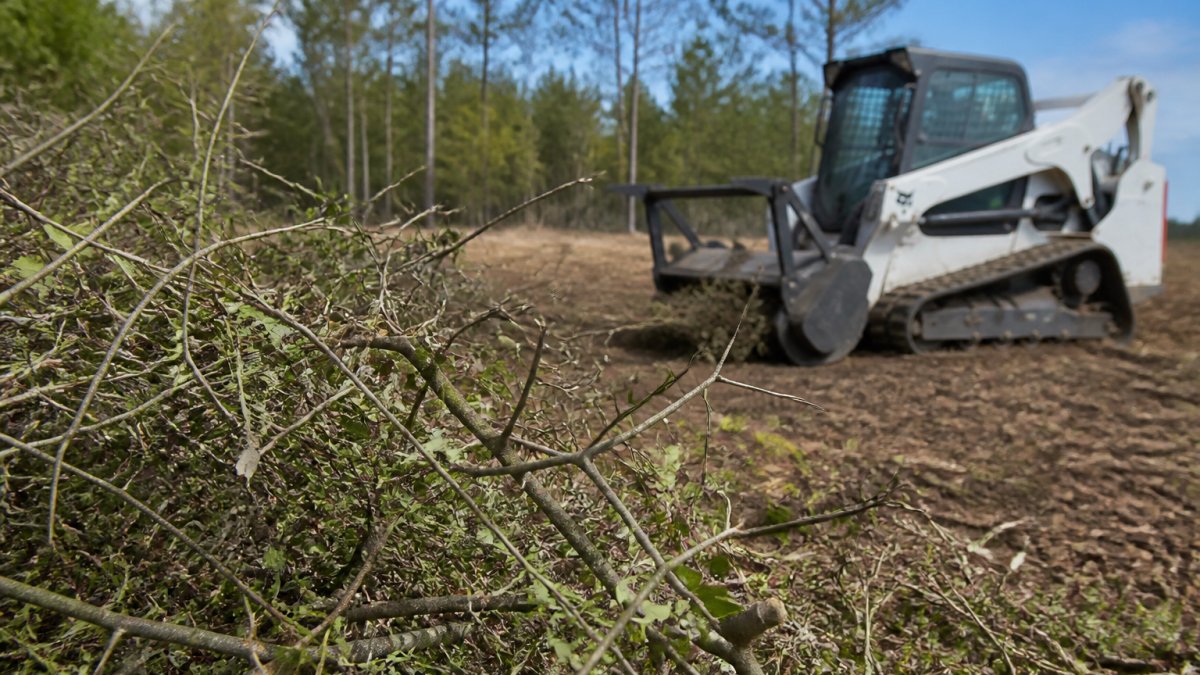
- A compact tracked forestry mulcher fits through a gate and mulches brush into ground cover instead of piling it.
- Mulch is the cheapest debris to handle because it never leaves your property.
- A quote given over the phone without seeing the lot is a guess that the final bill usually exceeds.
Table of Contents
- What Land Clearing for Small Residential Lots Really Involves
- How to Clear Land for a House: Site Prep Before Anything Moves
- How to Clear Land by Hand: When Manual Work Makes Sense
- Small Land Clearing Equipment for Tight Lots and Wet Ground
- Land Clearing Cost per Acre: What Drives the Number Up or Down
- Stumps, Debris, and Mulch: Handling What Comes Off the Lot
- DIY or Hire a Crew? A Decision Framework for Homeowners
- Getting a Clearing Quote for Your Lot
- Frequently Asked Questions
What Land Clearing for Small Residential Lots Really Involves
Land clearing for small residential lots is the work of removing trees, brush, vines, stumps, and roots from a building site, then leaving the ground ready for a house, driveway, and yard. On a small lot, that job is mostly about access and precision, not raw power. According to Eye on Housing's analysis of lot sizes, close to two-thirds of new single-family detached homes sold in 2025 sat on lots under 9,000 square feet. That is roughly a fifth of an acre. At Palmetto Mulching & Clearing, LLC, we clear lots this size constantly, and they fail for one reason: nobody planned where the machine would drive before the first cut.
Small-lot clearing has three parts:
- Assessment: walk the lot, mark boundaries, find utilities and protected trees
- Removal: cut brush and trees, grind stumps, separate what stays from what goes
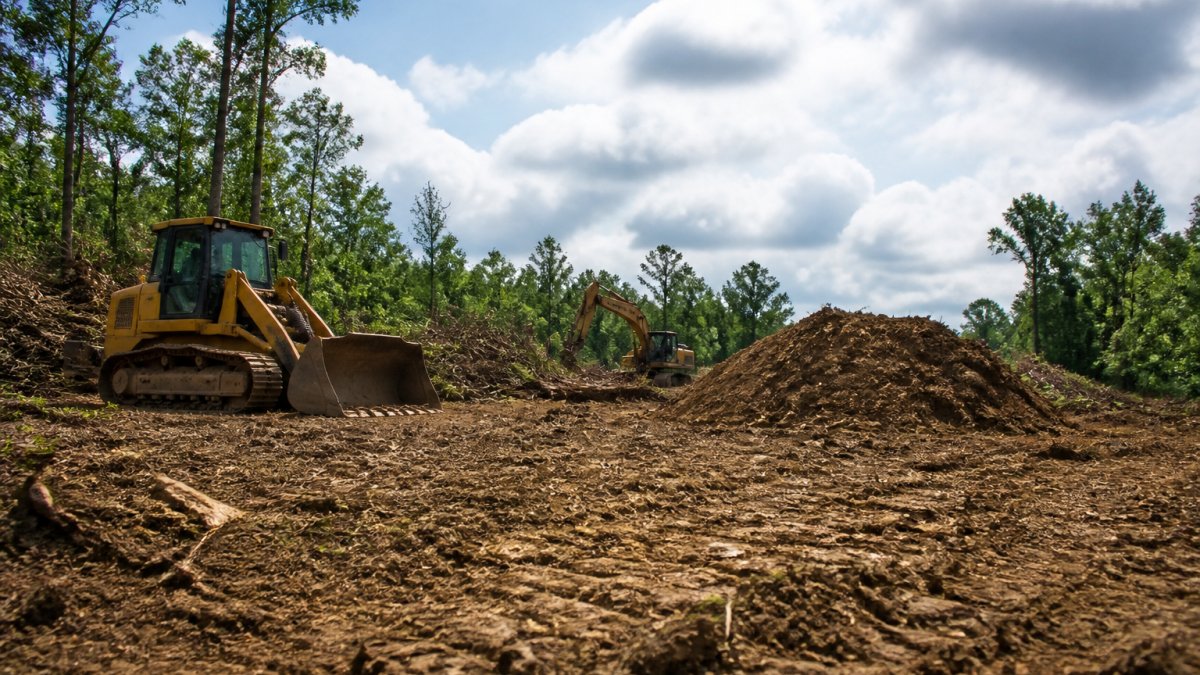
- Finish: grade the pad, restore drainage, haul or spread debris
Skip any step and you pay for it twice.
How to Clear Land for a House: Site Prep Before Anything Moves
Before a single tree falls, confirm what you legally can and cannot touch. Call 811 for utility locates, pull your property survey, and check local rules on tree removal and erosion control. The USDA Natural Resources Conservation Service land clearing standard treats clearing as a conservation practice, not just vegetation removal, because soil, water, and drainage all shift once cover comes off.
Your pre-clearing checklist:
- Utility locate tickets completed and marked on site
- Property corners flagged by a surveyor
- Building pad, driveway, and septic area staked
- Protected or heritage trees identified
- Erosion control and silt fence plan in place
- Neighbor notification done for fence lines
For a deeper walkthrough of this stage, see our guide on how to prepare land for construction.
How to Clear Land by Hand: When Manual Work Makes Sense
Manual clearing pays off on lots under about a quarter acre with light brush, saplings, and vines. Beyond that, hand work stops being cheap. It becomes slow.
The hand tools that actually earn their keep:
- Chainsaw for trees over 4 inches
- Brush cutter or clearing saw for thick stems
- Loppers and a mattock for roots and vines
- Rake, wheelbarrow, and tarps for hauling
What most guides miss is the disposal math. Hand clearing leaves you with piles of brush and no way to move them. Burning requires permits in most areas and safe distance from structures. Chipping means renting a chipper. Factor that in before you choose the machete over the machine.
Small Land Clearing Equipment for Tight Lots and Wet Ground
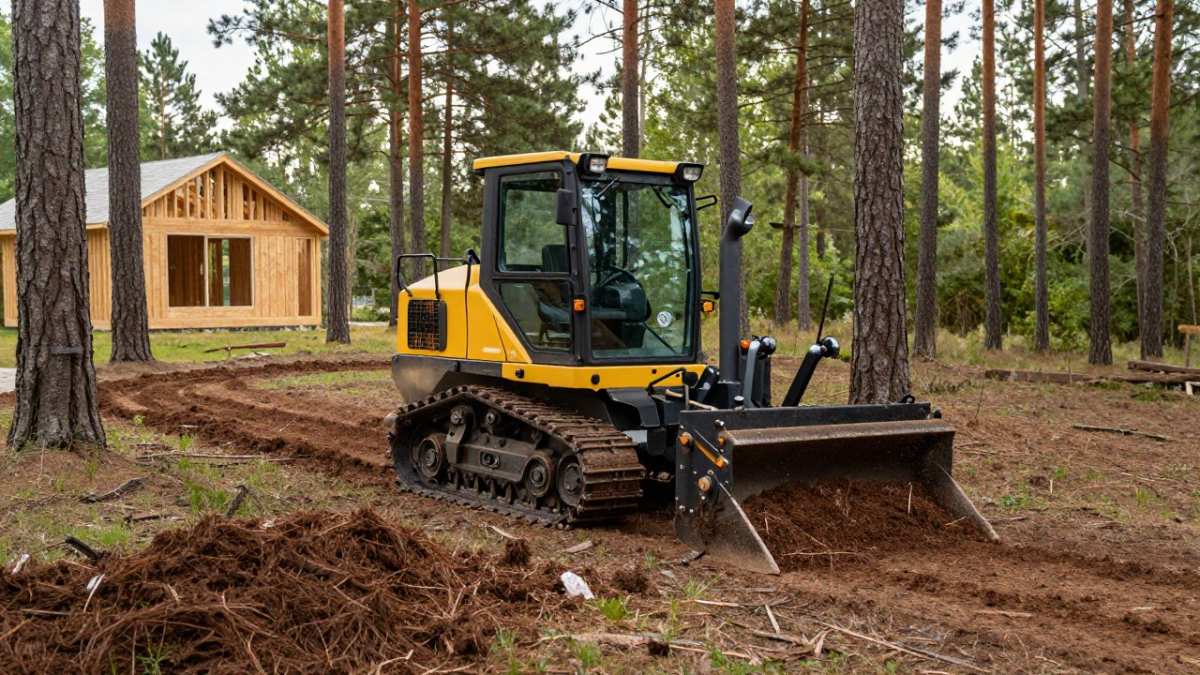
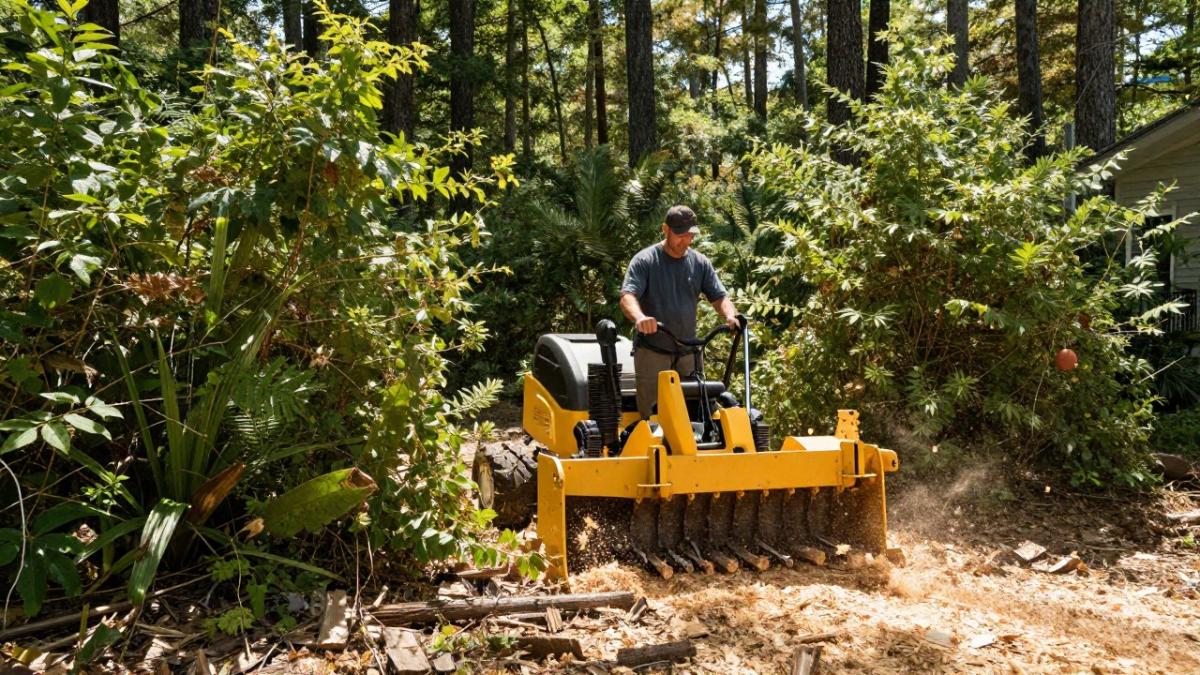
The right machine for a small lot is a compact tracked forestry mulcher, not a dozer. It fits through a gate, turns inside a driveway, and mulches brush into ground cover instead of piling it for hauling. Tracked undercarriage also spreads weight, which matters on wet ground where wheeled machines dig ruts.
Match the machine to the conditions:
| Lot Condition | Best Equipment | Why |
|---|---|---|
| Light brush, open access | Brush cutter or mulching head on skid steer | Fast, low ground pressure |
| Dense trees and vines | Tracked forestry mulcher | Cuts and mulches in one pass |
| Wet, soft ground | Tracked machine with wide pads | Spreads weight, less rutting |
| Tight gate or narrow drive | Compact track loader | Fits where full-size machines cannot |
| Stumps left behind | Stump grinder | Removes below grade |
If your ground stays soggy, read our guide on clearing land on wet soil without causing damage before you book equipment.
Land Clearing Cost per Acre: What Drives the Number Up or Down
Per-acre pricing is the wrong ruler for a small residential lot. Most published 2026 guides quote $1,200 to $12,000 or more per acre depending on vegetation and prep, per Ownrops' land clearing pricing guide, and Kitching Co. lists $1,200 to $6,200 per acre nationwide. On a 0.2-acre lot, that math breaks down because mobilization, minimum crew time, and equipment minimums dominate the bill. A crew that shows up for two hours still charges for the trip.
Pricing for a small lot is built from task-level line items, such as mobilization, brush mulching, tree felling, stump grinding, hauling, and grading. The final figure depends on quantity, access, and scope, so request a written quote from Palmetto Mulching & Clearing, LLC based on a site visit.
What pushes your number up on a small lot specifically:
- Narrow gate or driveway that forces a compact machine and slower cycle times
- Trees within falling distance of a house, garage, or power drop, which require rigging or sectional felling
- Wet ground that limits working days and requires matting or a different machine
- Long haul distance to a landfill or recycling yard
- Grading, fill, and silt fence required by local erosion-control rules
What pulls it down: light vegetation, easy access, on-site mulching that avoids hauling, and batching the work so mobilization is charged once. Time and method both feed the price, so our guide on how long land clearing takes can help you review a quote.
Stumps, Debris, and Mulch: Handling What Comes Off the Lot
Mulch is the cheapest debris to handle because it never leaves your property. Forestry mulching turns brush and small trees into a ground cover that holds moisture and slows erosion. Stumps are different. They must be ground below grade or pulled, then the holes backfilled and compacted or your foundation pad will settle.
Your three disposal routes:
- Spread it: mulch stays on site as ground cover
- Chip it: brush becomes landscape chips
- Haul it: logs and stumps go to a landfill or recycler, at a cost
When big trees and stumps are involved, professional tree removal services are often the safer call than homeowner chainsaw work near structures.
DIY or Hire a Crew? A Decision Framework for Homeowners
Most DIY-versus-hire advice stops at "it depends." A real decision needs the numbers and the failure modes. Here is the framework we walk homeowners through.
Step 1: Price the rental and consumables. Equipment rental and consumables such as bar oil, mixed gas, chain sharpening, and personal protective equipment add to the cost of DIY clearing. Check current rental rates at local equipment suppliers.
Step 2: Estimate labor honestly. Manual clearing of light brush and saplings is labor-intensive, and dense vines and briars take considerably longer. Felling and bucking a single large tree, limbing it, and stacking the wood can take a half-day or more even for someone experienced. Multiply your hours by what your weekend is worth and compare that to a quote.
Step 3: Add hauling and disposal. Brush piles do not disappear. Burning requires a permit in most jurisdictions and safe distance from structures and property lines. Chipping means renting a chipper and finding a place for the chips. Hauling means a trailer, dump fees, and multiple trips. On a small lot, disposal frequently costs more than the cutting.
Step 4: Weigh the damage risk. This is where DIY quietly loses. A dropped tree that hits a fence, a shed, or a neighbor's roof turns a $2,000 savings into an insurance claim. A wheeled rental machine on wet ground leaves ruts that cost more to repair than the clearing saved. A stump ground too shallow or not backfilled and compacted will settle under a foundation pad. Hiring often makes more sense as the lot grows, or when any tree sits near a structure or utility line, since risk is a major factor in the decision.
Step 5: Check the construction-ready requirement. If your end goal is a graded, inspected building pad, DIY rarely gets there. Grading, compaction, and drainage are skills and equipment, not weekend projects.
A simple rule: DIY the light brush and saplings if you have the time, the tools, and a clear drop zone. Consider hiring for larger trees near a structure, work on wet or narrow-access ground, and anything that has to pass an inspection. If you want a step-by-step example of doing it yourself, read 7 steps to clearing overgrown property first.
Getting a Clearing Quote for Your Lot
A useful quote starts with a site visit, not a phone number. Ask each provider to walk the lot, mark what stays, and put the scope in writing. Compare quotes on scope, not just the bottom line.
What a solid quote includes:
- Acreage and vegetation described
- Stump and root handling spelled out
- Debris plan: mulch, chip, or haul
- Grading and drainage included or excluded
- Insurance and cleanup terms
Watch out: a quote given over the phone without seeing the lot is a guess, and the final bill usually lands well above it.
Clearing a small residential lot is a precision job, and the wrong crew leaves ruts, stumps, and a pad that will not pass inspection. Palmetto Mulching & Clearing, LLC brings forestry mulching, excavation and grading, and stump and debris handling to lots across South Carolina, North Carolina, and Georgia, backed by our status as an SBA Certified Veteran Owned Business. We take on residential jobs, not just commercial work, and we walk every lot before quoting. Get started with Palmetto Mulching & Clearing, LLC and get a construction-ready lot without the guesswork.
Frequently Asked Questions
What is the average cost to clear 1 acre of land?
Land clearing prices vary widely with vegetation density, site preparation, and access. Your actual number depends on tree size, undergrowth density, stump removal, and how easily equipment reaches the work area. Ask for a written quote based on a site visit rather than a per-acre estimate over the phone.
Do I need a permit to clear my own land?
It depends on where you live and what you plan to remove. Many local jurisdictions require a grading or land-disturbance permit once you move soil or clear above a set area threshold, and some counties protect specific tree species or require stream buffers. Before any work starts, call your local planning office and your utility locator service. Clearing is best treated as planned work affecting soil, water, and wildlife, not just vegetation removal.
What equipment is best for clearing a small residential lot?
Compact tracked machines usually win on small lots. A forestry mulcher handles brush, saplings, and small trees in one pass and leaves mulch on site, while a mini excavator with a thumb pulls stumps and roots in tight spots where a dozer cannot turn around. Hand tools, including chainsaws and brush cutters, cover fence lines and areas too close to structures. Match the machine to access width, ground wetness, and how much material you want hauled away versus left as mulch.
How long does it take to clear a small lot?
A lightly wooded lot under an acre with scattered brush can often be cleared in a day or two with a forestry mulcher. Dense undergrowth, large stumps, wet ground, or a narrow access point can stretch the same lot to several days, and hauling debris adds time on top. Weather matters too, since saturated soil limits what equipment can safely cross. Ask your contractor for a schedule estimate tied to your specific conditions and building timeline.