 How-to
7 Steps to Clearing Overgrown Property for Recreation
Last Updated: November 14, 2026
Quick Summary
Clearing overgrown property for recreation starts with a slow walk to grade density, slope, wet ground, and tree size before any machine starts. Brush clearing costs $500 to $10,000 or more per acre depending on vegetation density and method, so matching the lightest suitable tool to the mapped density keeps the job safe and affordable.
- Light brush means grass, weeds, and saplings under 2 inches; heavy means mature trees and thickets.
- Forestry mulching grinds brush in one pass and leaves mulch that reduces erosion and suppresses regrowth.
- Flag a trail route first, follow the contour, and add water bars on grades to prevent erosion.
- Cutting invasives like kudzu and Chinese privet alone often fails because they resprout from fragments.
- Plan a light maintenance pass every couple of seasons and walk the property each spring.
Table of Contents
- Assess the Overgrowth Before Clearing Overgrown Property
- Compare Land Clearing Methods for Recreational Use
- Choose the Right Brush Clearing Equipment
- Forestry Mulching for Recreational Land: Why It Fits Trails and Open Space
- How to Clear Land for Trails Without Wrecking the Site
- How Long Does Land Clearing Take?
- Control Erosion, Invasive Species, and Long-Term Vegetation
- Book a Walk-Through With Palmetto Mulching & Clearing
- Frequently Asked Questions
Assess the Overgrowth Before Clearing Overgrown Property
Clearing overgrown property for recreation starts with a slow walk, not a machine.
Brush clearing runs anywhere from $500 to $10,000 or more per acre depending on vegetation density and method, according to OwnRops' 2026 brush clearing cost guide. That spread is exactly why the walk-through matters.
Here is what to look for when walking a property before a clearing quote.
Walk the Land and Map the Density
Density is the first number that changes the plan. Walk the boundary, then cut a few lines across the middle. Note where underbrush is chest-high and where it is only ankle-high.
- Light brush: grass, weeds, small saplings under 2 inches
- Moderate: dense saplings, vines, brush 2 to 6 inches
- Heavy: mature trees, thickets, root mass, storm debris
Mark wet spots and steep slopes on your map. Those areas limit what equipment can reach without rutting the ground.
Check Permits and Protected Vegetation
Many jurisdictions require a permit before clearing near wetlands, streams, or shorelines, and some require a sediment and erosion control plan for any ground disturbance.
Watch out: clearing protected vegetation or working in a wetland without approval can trigger fines and a stop-work order that costs far more than the permit.
Also check for invasive species while you walk. Vines like kudzu and Chinese privet spread aggressively, and how you handle them changes disposal and follow-up.
Compare Land Clearing Methods for Recreational Use
No single method wins everywhere. The right choice depends on what you want the land to become, how dense the growth is, and how much soil you can afford to disturb.
| Method | Best For | Disturbs Soil? | Debris Hauled Off? |
|---|---|---|---|
| Manual cutting | Small lots, sensitive areas | Minimal | Yes |
| Walk-behind brush mower | Light brush, flat ground | Low | No |
| Forestry mulching | Trails, open space, dense brush | Low | No, mulch stays |
| Excavator or bulldozer | Stumps, heavy clearing, grading | High | Yes |
| Herbicide application | Invasive species control | None | No |
A published warning from Best Version Media's land clearing guide notes that stripping all vegetation at once raises erosion risk on sloped ground. On a hilly recreational parcel, that is the difference between a usable trail and a gully by spring.
Choose the Right Brush Clearing Equipment
Match the machine to the density you mapped, not to what is sitting in the rental yard. Oversized equipment ruts wet ground and tears up root systems you wanted to keep. The practical rule most crews follow: pick the lightest tool that will finish the job in a reasonable number of passes, then step up only where the density forces it.
Hand Tools and Walk-Behind Machines
For light brush, fence lines, and tight spots a machine cannot reach, hand tools still earn their place. A brush hook or machete handles grass and weeds; loppers cut saplings up to about 1.5 inches; a pruning saw or chainsaw takes stems from 2 to 6 inches.
- Brush hook or machete: grass, weeds, vines under 1 inch
- Loppers and pruning saw: saplings 1 to 6 inches
- String trimmer with brush blade: tall grass, briars, light weeds
- Walk-behind brush mower: light brush on flat, dry ground
- Chainsaw: stems over 6 inches and limbing
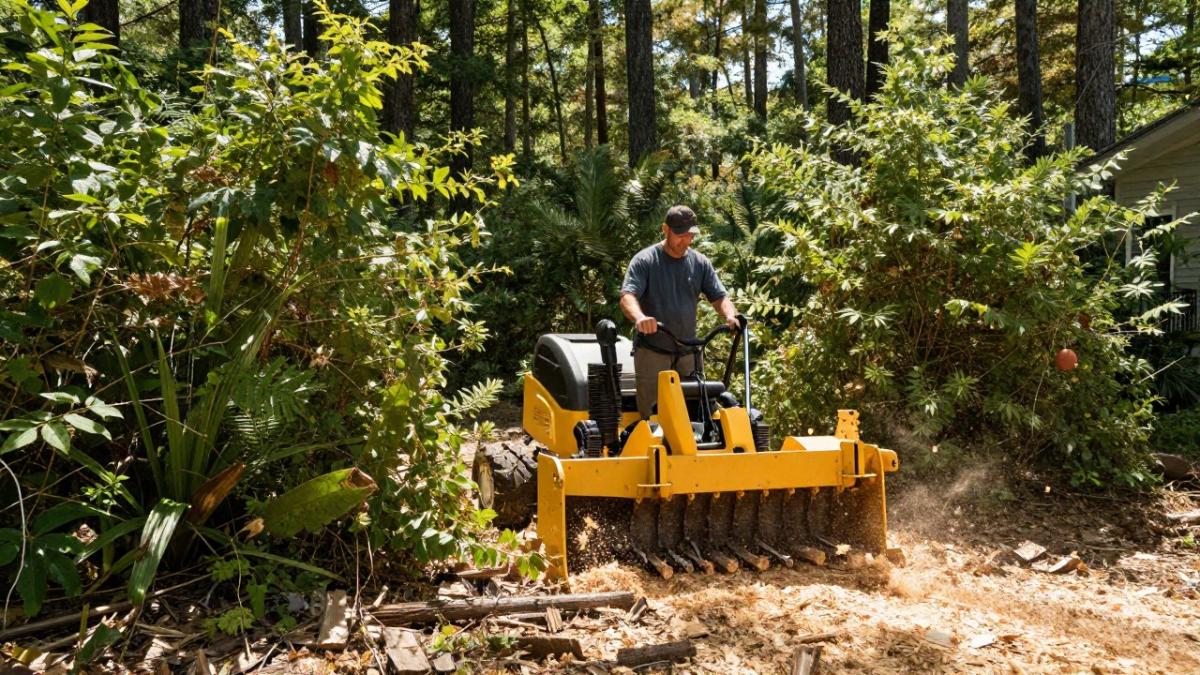
A walk-behind brush mower suits light growth on flat ground, but it will bog down in dense saplings and it cannot touch stumps. Rent one for a weekend rather than buying if the job is a one-time clearing.
Skid Steers, Excavators, and Bulldozers
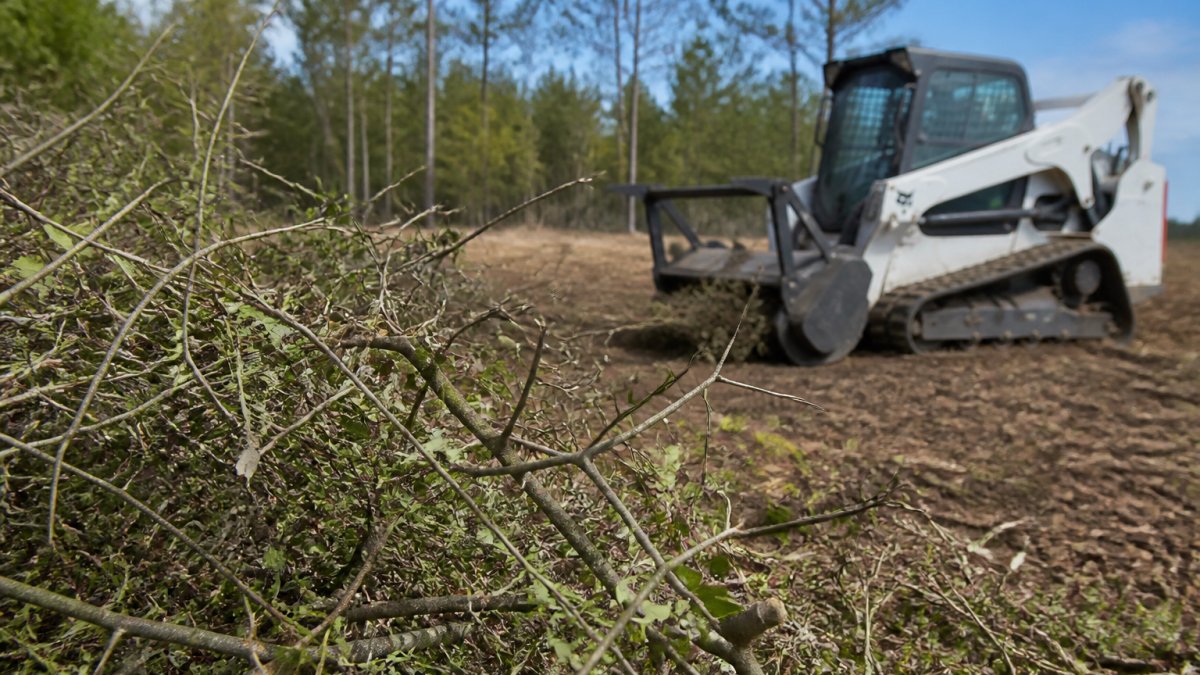
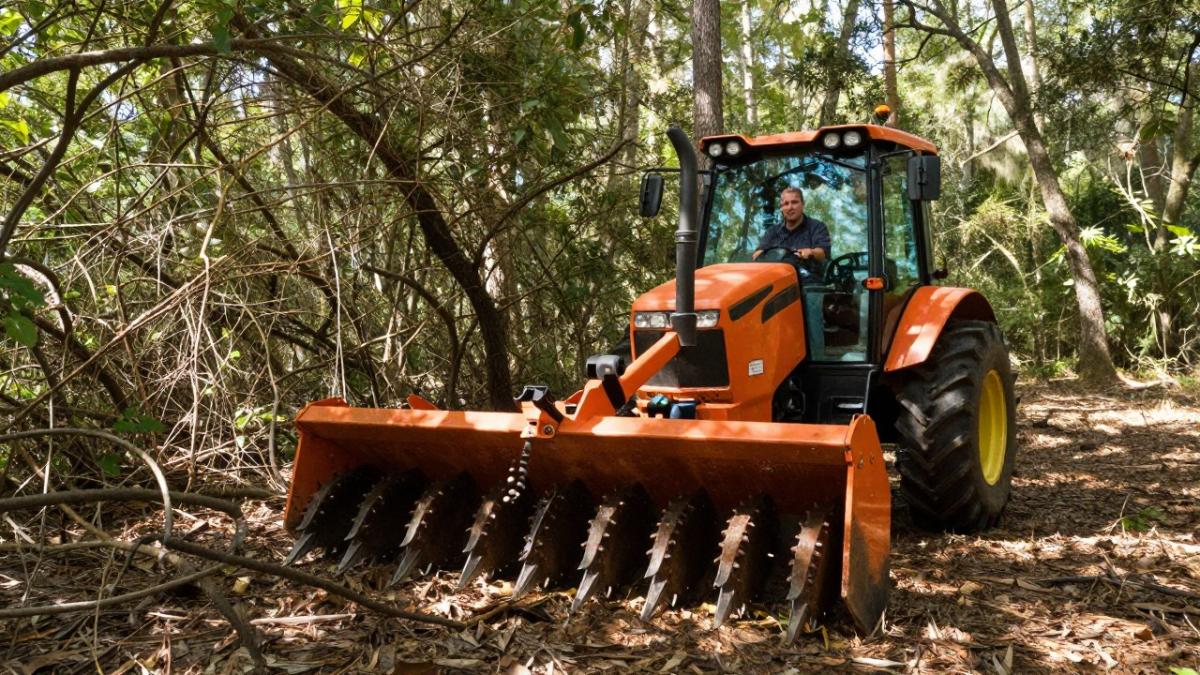
For dense saplings and thickets, a forestry mulcher mounted on a skid steer or compact track loader cuts and grinds in one pass.
Machine weight matters as much as attachment. A compact track loader in the 8,000 to 10,000 pound class is the common choice for residential mulching because it spreads its weight and does less damage than a wheeled skid steer on turf and soft soil.
Rent, Buy, or Hire It Out
Renting a walk-behind brush mower for a weekend is a reasonable DIY move for light growth. Renting a skid steer with a mulcher head is a different calculation, since an inexperienced operator can damage trees and soil the job was meant to protect.
Safety gear is not optional. Chainsaw chaps, a forestry helmet with face shield, hearing protection, and steel-toe boots are the baseline for any manual cutting. Watch out: cutting alone near dead trees is how serious injuries happen.
Forestry Mulching for Recreational Land: Why It Fits Trails and Open Space
Here is why. The mulch stays in place and holds moisture, which reduces erosion and suppresses regrowth.
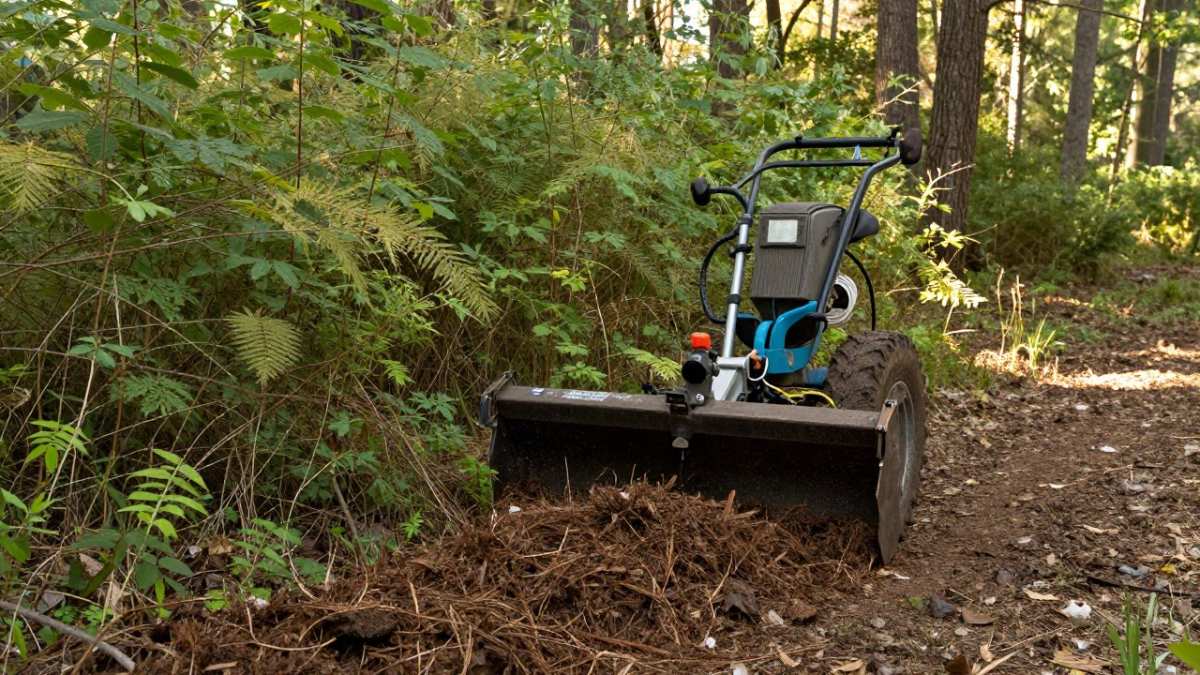
At Palmetto Mulching & Clearing, LLC, forestry mulching is one of our core services, and it suits recreational land for exactly this reason.
What most guides miss is the follow-up. Mulch slows regrowth but does not stop it. Plan a light maintenance pass every couple of seasons.
How to Clear Land for Trails Without Wrecking the Site
Trail clearing is a design job disguised as a cutting job. The goal is a path that drains, follows the land, and does not turn into a mud channel after the first heavy rain.
- Flag the route first. Walk it and mark the centerline with tape before any cutting.
- Follow the contour. A trail that runs across a slope, not straight down it, sheds water instead of channeling it.
- Keep the canopy. Leave mature trees for shade and root stability.
- Cut brush at ground level. Flush cuts leave no trip hazards.
- Add water bars on grades. Small angled berms divert runoff off the trail.
- Seed or mulch bare edges. Bare soil is where erosion starts.
- Walk it after rain. Fix soft spots before they widen.
If your ground stays wet, our guide on how to clear land on wet soil without causing damage covers the sequencing that keeps ruts and compaction out of the equation.
How Long Does Land Clearing Take?
Timelines depend on lot size, density, access, and disposal needs. For a project-specific schedule, request a quote from Palmetto Mulching & Clearing, LLC. Density, access, weather, and disposal drive the timeline more than acreage alone.
A few things stretch the schedule: wet ground that limits equipment access, steep slopes that slow the machine, and debris that has to be hauled rather than mulched. Dry weather helps.
Control Erosion, Invasive Species, and Long-Term Vegetation
Clearing is the first step in vegetation management, not the last. Bare ground wants to move, and invasive species want to come back. Most guides stop at "seed it and watch it," which is why so many cleared parcels wash out or revert within two seasons. The three jobs below are where the long-term outcome is actually decided.
Stabilize Soil Before It Moves
Erosion starts the moment vegetation is gone and rain hits bare soil. On a slope, the first heavy storm can cut a gully that costs more to repair than the clearing did.
- Keep mulch in place. Forestry mulch left on the ground is a protective layer; do not rake it off trails and open areas.
- Seed or mulch bare edges. Disturbed soil along trail edges and staging areas is where erosion begins. Native grasses and shrubs stabilize soil and outcompete weeds once established.
- Divert runoff with water bars. Small angled berms across a trail shed water off the path instead of letting it channel down the middle.
- Use silt fencing and check dams. On any ground disturbance near a slope or drainage, silt fence and small check dams trap sediment before it leaves the site.
- Clear in phases. Avoid stripping a whole slope at once; leave strips of vegetation to hold soil while the rest stabilizes.
A common pattern on sloped recreational parcels is a trail cut straight down the fall line that turns into a mud channel by spring. Following the contour and adding water bars on grades prevents most of that damage before it starts.
Identify Invasives Before You Cut
Some plants resprout from root fragments and cut stems, so cutting them without a follow-up plan makes the problem worse. Learn to recognize the worst offenders before anyone starts cutting.
- Kudzu: fast-growing vine that blankets trees and ground; spreads from runners and root crowns.
- Chinese privet: dense evergreen shrub with small oval leaves and dark berries; resprouts aggressively after cutting.
- Japanese honeysuckle: twining vine with fragrant white-to-yellow flowers; smothers understory.
- Tree of heaven: fast-growing tree with compound leaves and a foul odor when crushed; prolific root suckers.
- Multiflora rose: thorny shrub with arching canes and clusters of small white flowers.
For these species, cutting alone is often not enough. A targeted herbicide application after cutting, timed to the label directions, is the common follow-up. Confirm which species you have and check with your local extension office on approved control methods before treating.
Keep It Clear With a Maintenance Plan
Mulch slows regrowth but does not stop it. Plan a light maintenance pass every couple of seasons, and walk the property each spring to flag new growth before it becomes a thicket.
- Walk the property each spring and flag new growth
- Re-mulch trail edges every two to three seasons
- Recheck drainage after major storms
- Remove storm debris before it becomes a thicket
- Spot-treat invasive resprouts early
That routine keeps a cleared parcel usable for years instead of one season.
Book a Walk-Through With Palmetto Mulching & Clearing
The hardest part of clearing overgrown property for recreation is not the cutting. It is knowing what to cut, what to leave, and what the ground can take.
Palmetto Mulching & Clearing, LLC is an SBA Certified Veteran Owned Business, owned and operated by a retired Marine Corps veteran, serving South Carolina, North Carolina, and Georgia.
Visit the Palmetto Mulching & Clearing, LLC website to request a quote for your overgrown acres.
Frequently Asked Questions
Is forestry mulching a good way to clear land for trails?
Forestry mulching suits trail work because it grinds underbrush and saplings into mulch on site, leaving a walkable surface without hauling debris away. It also keeps desirable trees standing, so you can route trails around them. On slopes, mulching leaves root systems mostly intact, which limits erosion compared with pushing everything off with a bulldozer. The result is a low, even layer of mulch that holds moisture and reduces mud on the path.
How long does land clearing take for a few acres?
Timeline depends on clearing density, topography, and equipment access. A few acres of light to moderate brush can move quickly with a forestry mulcher, while dense vines, dead trees, and wet spots slow the work because machines must reposition or wait for drier ground. Ask for a walk-through so the contractor can see the property access and vegetation before quoting a schedule. Build in extra time for debris removal and any stump grinding you want done.
Can you clear overgrown land yourself, or should you hire a professional?
Small patches of saplings and light brush are manageable with walk-behind brush mowers and hand tools, provided you wear proper PPE. Dense underbrush, large trees, wet ground, and sloped terrain raise the risk of injury and equipment damage. Professional crews bring self-propelled and tracked machines built for heavy vegetation management, plus insurance and knowledge of permitting rules. Compare the rental cost and your own time against a quote before deciding.
What happens to brush and debris after clearing?
Forestry mulching leaves chipped material on site as a ground cover, which means no hauling and no burn piles. Other methods produce debris that must be chipped, burned under local rules, or hauled to a disposal site, and that removal adds cost and time. If you want the land bare for building or seeding, ask the contractor to include debris removal in the scope. Storm debris and old fence wire often turn up in overgrown areas and need separate handling.