 How-to
How Long Does Land Clearing Take? Timeline by Acre and Method
Quick Summary
Land clearing usually takes a few hours to several days per acre, depending on what grows on the site. Light brush clears in hours to one day per acre, while dense woods with large trees can take two to four days per acre. Permits, utility locating, and cleanup add to the total project time.
- Professional teams may take 2 to 12 hours to clear one acre.
- Dense woods with large trees can take two to four days per acre.
- Forestry mulching may clear about half to one acre per machine day.
- Call 811 for utility locating before any digging or grubbing.
- Confirm whether quotes include stump removal, debris hauling, and erosion control.
Table of Contents
- How Long Land Clearing Takes for 1 Acre and 2 Acres
- How Long Forestry Mulching Takes Per Acre
- Clearing Methods Compared: Mulching, Grubbing and Bulldozing
- Factors That Change Your Land Clearing Timeline
- How Much Wooded Land Clearing Costs by Acre and Method
- How to Prepare Your Property Before the Crew Arrives
- Scheduling Your Clearing Project and Booking a Site Assessment
- Frequently Asked Questions
How Long Land Clearing Takes for 1 Acre and 2 Acres
The time it takes to clear one acre depends heavily on what is growing on it. Light brush clears far faster than dense woods with large trees, and two acres of mixed woods will typically take several days rather than a single afternoon.
According to Angi's land clearing cost and time guide, a professional team may take 2 to 12 hours to clear one acre. That range is wide because the work depends heavily on site conditions rather than acreage alone.
The following table gives a practical starting point for planning. These are working estimates for active clearing time only, not guarantees.
| Site Condition | 1 Acre (Active Clearing Time) | 2 Acres (Active Clearing Time) |
|---|---|---|
| Light brush, few small trees | A few hours to one day | One to two days |
| Mixed brush and small trees | One to two days | Two to four days |
| Dense woods, large trees | Two to four days | Four to eight days |
Two things can stretch these numbers quickly: access and weather. A narrow driveway that limits equipment, or several rainy days in a row, can add time that no estimate fully captures.
Machine time is not the same as total project lead time. The table above measures only the hours the equipment is running. The full schedule from first call to finished site usually includes:
- Site assessment and written estimate: typically 1 to 5 business days, depending on how quickly the contractor can visit and how complex the scope is.
- Utility locating: most states require calling 811 before digging or grubbing; locate requests are commonly completed within a few business days, and the marks expire, so timing matters.
- Permits and approvals: local grading, erosion-control, or tree-removal permits can add days to weeks. Requirements vary by jurisdiction, so confirm with your local building or planning department early.
- Mobilization: moving equipment to the site and setting up can take a few hours to a full day, especially on rural parcels with long access routes.
- Active clearing: the machine-time ranges in the table.
- Cleanup and debris handling: chipping, hauling, or spreading mulch can add half a day to several days on larger or debris-heavy sites.
Ask each contractor whether their estimate covers active clearing only or the full scope through cleanup, and get the answer in writing so quotes are comparable.
Watch out: if a quote seems unusually fast, confirm whether it includes stump removal, debris hauling, and erosion control, because those tasks often account for the difference between a one-day job and a week-long project.
How Long Forestry Mulching Takes Per Acre
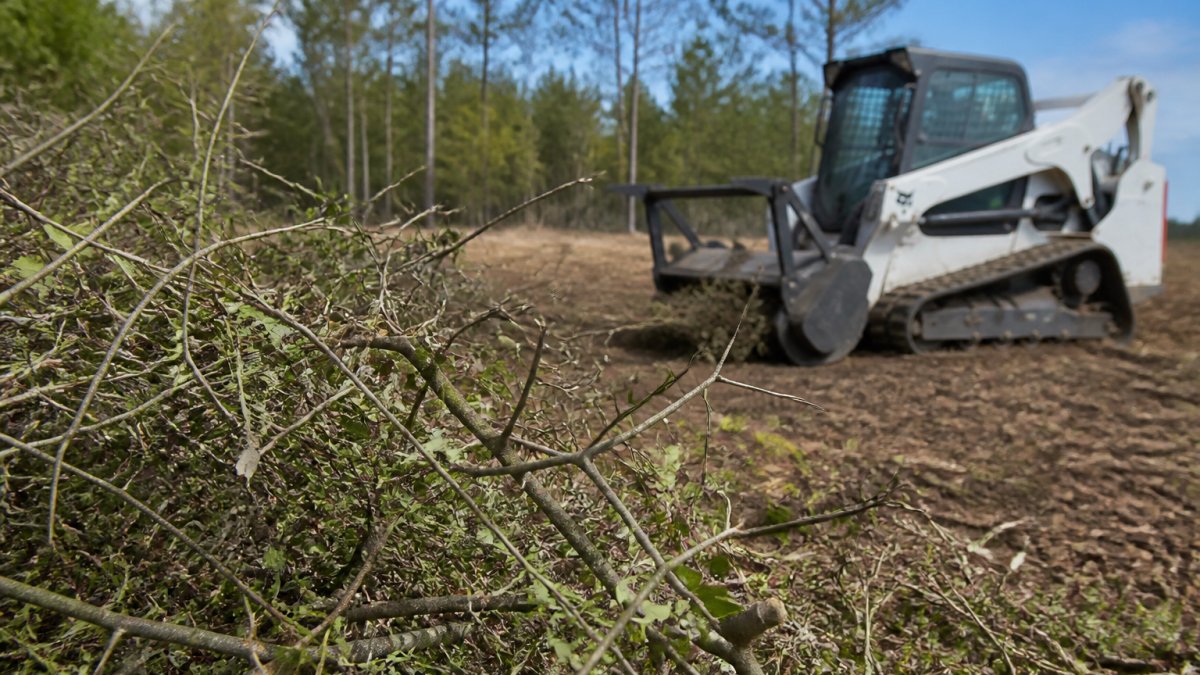
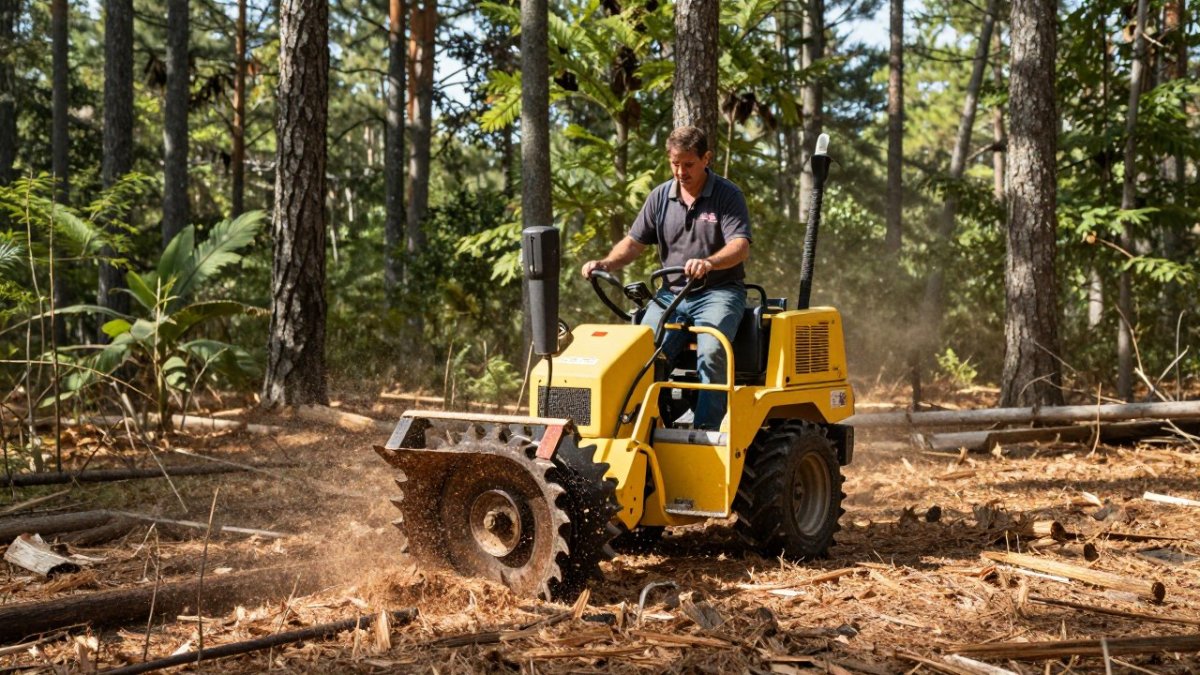
Forestry mulching grinds trees and brush into fine chips in a single pass, which makes it one of the faster clearing methods. A compact-track forestry mulcher may clear roughly half an acre to one acre per machine day, according to 9 Arrow's land clearing timeline guide. Treat that figure as a planning guide. Thick stands of mature trees slow the machine down considerably.
Machine time is only part of the schedule. Setup, moving equipment on site, and cleanup all add days that many estimates leave out.
Clearing Methods Compared: Mulching, Grubbing and Bulldozing
Each clearing method takes a different amount of time and leaves the land in a different condition. Choose the method based on the end use of the land, not only on speed.
| Method | Typical Pace | Leaves Stumps? | Best For |
|---|---|---|---|
| Forestry mulching | About half to one acre per machine day | No, stumps are ground into the mulch | Brush, small to mid-size trees, building sites |
| Grubbing (stump removal) | Slower, added after clearing | No, stumps are pulled out | Ground that needs to be fully excavated |
| Bulldozing | Varies widely with terrain and debris | Often, depending on the blade work | Large areas, heavy debris, grading work |
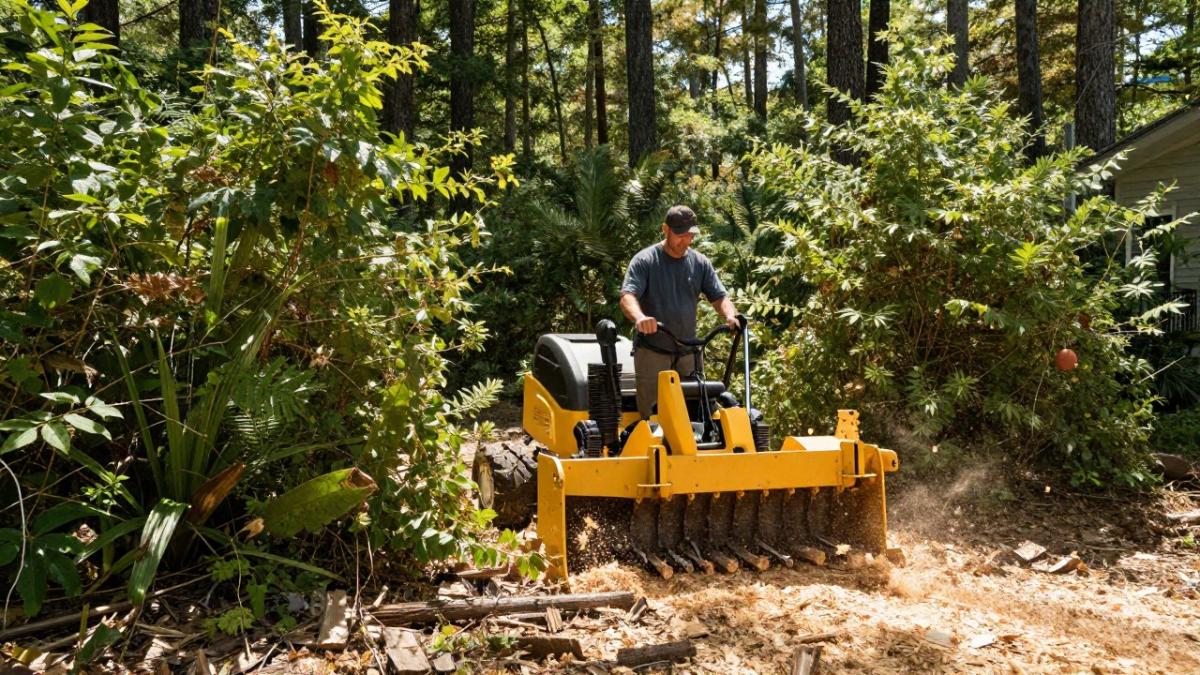
Mulching is usually the quickest route to a clear, usable lot. Grubbing adds time because each stump is removed separately, but it may be necessary if the site will be dug or graded deeply. Bulldozing can move a lot of material, but it disturbs more soil and usually needs more cleanup afterward.
Factors That Change Your Land Clearing Timeline
Several conditions shape how long the job takes. Knowing them before you book helps you set realistic expectations.
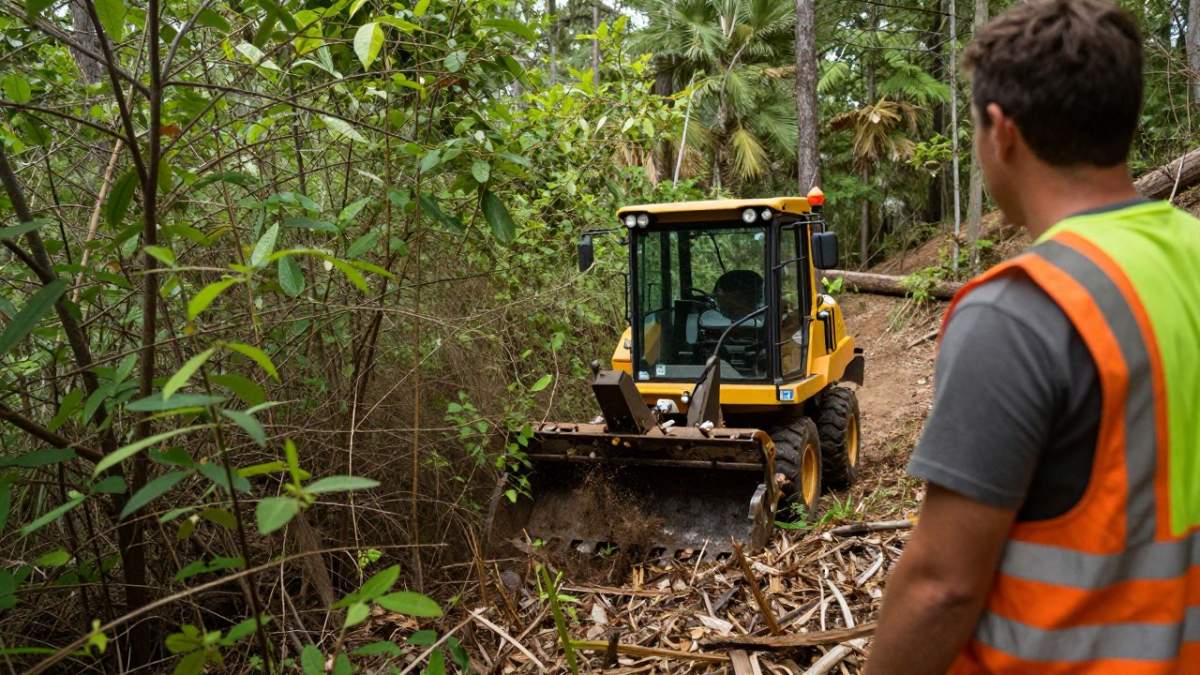
- Vegetation density: Dense understory and vines slow the machine far more than scattered brush.
- Tree size and count: Large trees take longer per tree, and many small trees add up quickly.
- Terrain and slope: Steep ground, rocks and uneven surfaces reduce how fast the equipment can move safely.
- Soil moisture: Wet ground can stop equipment entirely and forces the crew to wait for drier conditions.
- Site access: A narrow entrance or a long haul route adds setup time.
Wet conditions deserve special attention. Soggy soil can trap equipment and damage the ground, so schedules often slip after heavy rain.
How Much Wooded Land Clearing Costs by Acre and Method
Cost follows the same drivers as time. Faster methods on open ground generally cost less than slow work in dense, rough terrain. Pricing depends on acreage, vegetation, equipment, access and disposal of the debris, so it is difficult to give a single figure that fits every property.
For an accurate number, ask for a site-specific quote. Compare quotes on the same scope of work, including whether stump removal and debris handling are included.
For current pricing, visit the Palmetto Mulching & Clearing, LLC website or request a quote directly. Prices are based on your site, not a published rate card.
How to Prepare Your Property Before the Crew Arrives
Preparation is where many schedule surprises can be prevented. The following steps can help reduce delays before the crew arrives.
- Confirm permits and approvals first. Check with your local building or planning department about grading, erosion-control, tree-removal, or burn permits. Requirements vary by jurisdiction, and some approvals take weeks, so start this before booking a crew date. Ask the contractor whether they pull permits or whether it is the owner's responsibility.
- Call 811 for utility locating. Most states require a locate request before any digging or grubbing. Locate marks are typically valid for a limited window, so schedule the request close to the work date rather than weeks in advance. Private lines such as septic, irrigation, and low-voltage wiring are usually not marked by the public service and must be identified separately.
- Mark boundaries and hazards. Flag property lines, fences, wells, septic fields, and any structures to avoid. A surveyor's plat or a boundary walk with the contractor prevents expensive mistakes at the edges.
- Identify protected and keep trees. Decide which trees or areas you want left standing and mark them clearly with ribbon or paint. Some jurisdictions protect certain species or size classes, so confirm before marking trees for removal.
- Clear the access path. Remove gates, low branches, and parked vehicles along the route to the work area. Confirm the widest equipment the crew will use and measure the narrowest point on the route, because a gate that fits a pickup may not fit a mulcher or bulldozer.
- Check the ground and weather. If the site has been very wet, expect a short delay rather than forcing equipment onto soft soil. Soggy ground can trap equipment and damage the site, and repair costs often exceed the delay.
- Confirm the disposal plan. Know where the mulch will go and whether it stays on the property. If debris must be hauled off, confirm who arranges hauling and where it will be disposed of, since disposal rules and fees vary locally.
- Do a pre-work walkthrough. Walk the site with the contractor before the crew arrives to confirm the scope, the keep-zones, the access route, and what "finished" means, including whether stump removal, grading, and erosion control are included.
Scheduling Your Clearing Project and Booking a Site Assessment
Plan the project in stages: a site visit, a written estimate, then the work itself. Give yourself a buffer for weather, since rain is the most common reason clearing schedules slip.
If you are preparing land for construction or another deadline, tell the contractor early. Booking a site assessment lets the crew confirm the method, the timeline and the scope before you commit.
Palmetto Mulching & Clearing, LLC serves South Carolina, North Carolina and Georgia. Contact our team to schedule a site assessment.
Frequently Asked Questions
How long does it usually take to clear 1 acre of land?
Light brush clears fastest, while dense mixed woods and large trees push the time up. Machine time is only part of the schedule, since mobilization, site access and debris handling add days. Treat any single figure as a starting point and confirm it against the specifics of your lot.
How long would it take to clear 2 acres of land?
Clearing two acres generally takes longer than one acre at the same vegetation density, though it rarely scales perfectly. Weather, terrain and access can extend that. Ask any contractor to state their assumptions about acres per day so you can compare estimates fairly.
How long does forestry mulching take per acre?
Dense brush, large stems and wet or sloped ground slow production. Forestry mulching leaves vegetation ground into mulch rather than hauling it off, which often saves time on debris removal but leaves the ground surface rough. Confirm whether a quoted timeline includes cleanup and grading.
How much does it cost to clear 1 acre of wooded land?
Pricing depends on vegetation density, tree size, terrain, access and whether debris is mulched or hauled away, so no single figure applies to every lot. Get written quotes that list the method, the acreage and what is included, such as stump treatment or grading. Comparing quotes on the same scope of work is more useful than comparing headline numbers. Current pricing is available from Palmetto Mulching & Clearing, LLC on request.